 By Saurav Mehra
An electric car becomes much easier to understand when you stop asking, “How far can it travel on one charge?” and instead ask, “How far do I actually drive every day?”
If your daily routine involves a 20 km office commute, another 10–15 km for school runs, shopping or errands, and the car returns to a parking spot where it can be charged overnight, even a relatively modest-range EV can cover several days of normal use. For daily driving, charging convenience, realistic range, size, comfort, safety and running costs often matter more than chasing the largest battery available.
India’s EV market now stretches from compact city cars to long-range electric SUVs. Here are 10 electric cars that make particularly strong cases for everyday use.
1. Tata Punch.ev
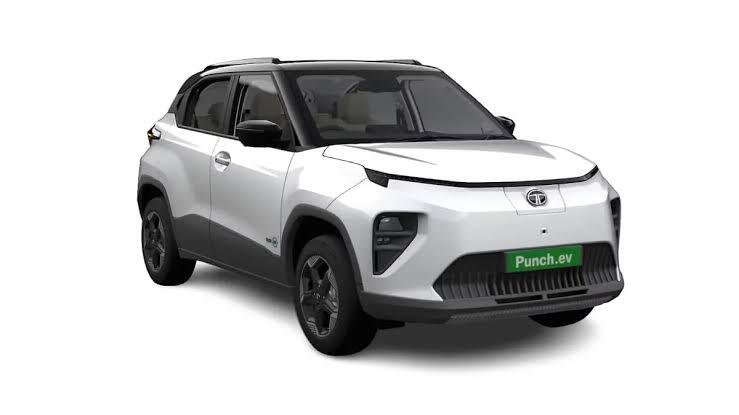
The updated Punch.ev is one of the most balanced electric cars for Indian daily use.
It is available with 30 kWh and 40 kWh battery packs. The larger battery has an ARAI-certified range of 468 km, while Tata estimates a more realistic C75 range of approximately 335–355 km.
Its compact footprint works well in traffic, while the raised driving position and SUV-like ground clearance are useful on imperfect urban roads. The current Punch.ev also starts at ₹9.69 lakh ex-showroom.
Best for: Families wanting one EV for city use and occasional intercity travel.
2. Tata Tiago.ev
Not everyone needs 400 or 500 km of claimed range. For predictable city commuting, the Tiago.ev demonstrates why a smaller battery can still make sense.
The current 24 kWh version offers an ARAI-certified 285 km range, with Tata quoting a C75 real-world estimate of around 205–215 km. It can also add around 100 km of range in 18 minutes under specified fast-charging conditions.
Its hatchback dimensions make parking and navigating congested streets easy, while six airbags are now standard.
Best for: Buyers primarily using their EV for city commuting.
3. MG Comet EV
The Comet EV takes the city-car idea more seriously than almost anything else on the Indian market.
Its tiny dimensions are an advantage when squeezing through congested roads or finding parking in crowded neighbourhoods. The cabin is surprisingly usable for its exterior size, although the two-door layout makes rear-seat access less convenient.
The Comet works best when viewed as an urban commuter rather than a conventional family car for frequent highway trips.
Best for: Short commutes, crowded cities and households needing a second car.
4. Tata Nexon.ev
The Nexon.ev is a sensible step up for buyers who find smaller EVs too limiting.
The current range includes multiple battery configurations. Tata lists the 45 kWh version with an MIDC P1+P2 figure of 489 km and a C75 real-world range estimate of approximately 350–375 km.
That additional usable range makes spontaneous weekend journeys easier while retaining dimensions that remain manageable for everyday city driving.
Best for: Buyers wanting an established electric compact SUV for mixed usage.
5. MG Windsor EV
The Windsor EV approaches electric mobility with an emphasis on cabin space and comfort.
Its crossover/MPV-like proportions provide generous passenger accommodation, making it particularly relevant to families whose everyday driving includes multiple occupants rather than a single commuter.
Its spacious rear seating can be especially valuable for office travel, elderly family members and longer urban journeys. Buyers should compare outright purchase and battery-related financing structures carefully, as the economics can differ depending on the chosen ownership plan.
Best for: Families prioritising cabin comfort and space.
6. Hyundai Creta Electric
For someone already comfortable with the size and practicality of a conventional midsize SUV, the Creta Electric makes the switch to an EV relatively straightforward.
Hyundai offers 42 kWh and 51.4 kWh batteries. The company lists respective driving ranges of 420 km and 510 km, depending on the configuration.
The Creta Electric’s advantage is familiarity: it provides a mainstream SUV format rather than asking buyers to accept an unconventional body style simply because they are switching to electricity.
Best for: Families moving from a petrol or diesel midsize SUV to an EV.
7. Tata Curvv.ev
The Curvv.ev is aimed at buyers who want their electric car to feel more distinctive than a conventional family crossover.
Its 55 kWh configuration offers an MIDC P1+P2 range of 502 km, while Tata’s C75 estimate is approximately 400–425 km.
That range provides significantly more flexibility than a city-focused EV. It means daily commuting may require relatively infrequent charging while weekend highway journeys become easier to plan.
Its coupé-SUV styling is another attraction, although buyers should judge rear-seat space and visibility personally during a test drive.
Best for: Buyers wanting style, technology and longer usable range.
8. Mahindra BE 6
The BE 6 represents a newer generation of Indian EVs designed around a dedicated electric platform.
Mahindra offers multiple battery configurations, with current versions providing substantial certified range. The company’s latest EV information lists real-world expectations exceeding 400 km for 59 kWh configurations, rising further with larger batteries under its stated test conditions.
Its powerful electric drivetrain, technology-rich cabin and long-range capability make it more than a basic commuter. For everyday use, the large battery can mean fewer charging sessions during the working week.
The trade-off is that its dimensions and price make it more car than some urban users actually need.
Best for: Buyers wanting performance and long range alongside daily usability.
9. Mahindra XEV 9e
The XEV 9e is considerably larger than a typical city EV, but it can work exceptionally well as the only car in a household.
Mahindra quotes around 400 km of real-world range for the 59 kWh battery and approximately 500 km for the 79 kWh battery under its specified internal city-testing conditions.
That makes frequent charging less necessary for ordinary commuting and provides greater confidence when taking longer family journeys.
Its size, however, means buyers living with narrow lanes or small parking spaces should check physical compatibility before being won over by the technology.
Best for: Families wanting a premium long-range EV as their primary car.
10. Tata Harrier.ev
The Harrier.ev makes sense for buyers who want electric running without giving up the space and road presence of a larger SUV.
Depending on battery and drivetrain configuration, Tata lists C75 real-world estimates ranging from approximately 420–445 km to 480–505 km.
For someone driving only 30–40 km daily, that is far more range than necessary for commuting alone. Its real advantage is versatility: weekday urban use can be combined with longer family journeys without requiring a separate ICE vehicle.
Best for: Buyers wanting a large electric SUV for both everyday and long-distance use.
How Much EV Range Do You Actually Need?
A buyer driving 35 km per day covers roughly 245 km per week over seven days. That puts EV range into perspective.
You do not necessarily need a 600 km claimed-range vehicle simply because it sounds reassuring. Instead, consider your longest normal journey, home-charging availability and how frequently you travel outside the city.
For predominantly urban use, an EV offering around 200–300 km of realistic usable range can already be sufficient for many households. More range becomes valuable when the vehicle frequently handles highway trips or home charging is inconvenient.
Also remember that certified range is not guaranteed real-world range. Tata itself publishes C75 estimates alongside certification figures for several models, demonstrating the difference between laboratory certification and expected practical usage.
Speed, aggressive acceleration, air-conditioning, temperature, vehicle load, gradients and driving conditions can all influence consumption. Mahindra’s own documentation, for example, notes that vehicle load and high temperatures can reduce EV range.
What to Check Before Buying an EV for Daily Use
Before choosing an electric car, calculate your requirements around your actual routine.
- Home charging: Dedicated overnight charging is one of the biggest conveniences of EV ownership.
- Realistic range: Look beyond the largest advertised range number.
- Daily distance: Compare your normal weekly driving with realistic usable range.
- Fast charging: Important if you frequently make longer journeys.
- Parking: Larger electric SUVs may be unnecessary for congested urban environments.
- Battery warranty: Check the exact warranty applicable to the model and ownership type.
- Service network: Confirm EV-trained service support near where you live.
- Boot and cabin space: Battery capacity should not distract from everyday family practicality.
FAQs
Q1. Which electric car is best for everyday city driving in India?
A. For many buyers, the Punch.ev offers a strong balance between dimensions, range and family practicality. The Tiago.ev can be more economical for predictable commuting, while the MG Comet EV is particularly suited to short-distance urban use.
Q2. Is 250 km of EV range enough for daily use?
A. It can be more than sufficient if your normal commute is 20–40 km per day and you can charge conveniently at home. Buyers regularly making long highway journeys may benefit from a larger battery.
Q3. Is an EV practical without home charging?
A. It is possible, but usually less convenient. Depending entirely on public charging means considering charger location, availability, charging speed and waiting time. Reliable home or workplace charging significantly improves the everyday EV ownership experience.
Q4. Should I buy a long-range EV even if I only drive in the city?
A. Not automatically. A larger battery can provide greater flexibility, but it can also increase purchase price and vehicle weight. For predictable urban driving with home charging, a smaller and less expensive EV may satisfy your needs just as effectively.