 By Meghna Sharma
 How to make money in intraday trading is one of the most searched questions on Indian stock market forums, and the honest answer starts with a number most articles bury at the bottom: 7 out of 10 individual intraday traders in India’s equity cash segment lost money in FY23, according to SEBI’s own study, with the average loser down ₹5,371 for the year. That’s not a reason to avoid this article — it’s the exact context you need before learning the mechanics, because the traders who do make money treat this as a structured, rule-bound activity, not a hunch-driven side hustle.
What Intraday Trading Actually Means
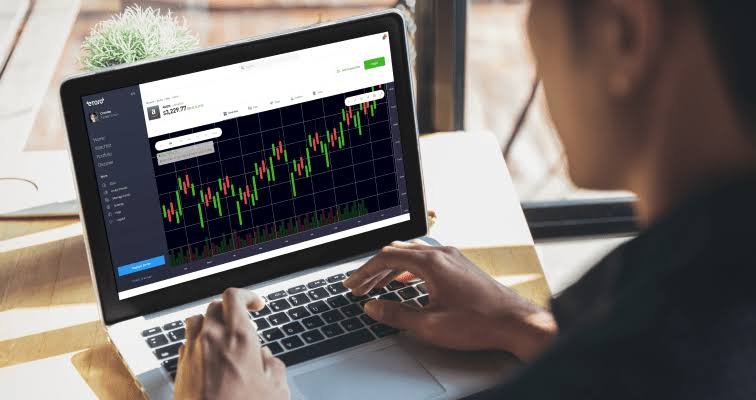
Intraday trading means buying and selling the same stock within a single market session, with no position carried overnight.
- Indian equity markets run 9:15 AM to 3:30 PM, Monday to Friday, with a pre-open session from 9:00 to 9:15 AM used purely for price discovery
- Most brokers auto-square-off any open intraday position between 3:15 and 3:20 PM if you haven’t exited manually — and this can trigger real slippage on thinly traded stocks
- You place these as MIS (Margin Intraday Square-off) orders, distinct from delivery orders, which is what gives you access to leverage in the first place
- The best window for volume and price movement is widely cited as 9:15 to 10:30 AM, when the day’s opening imbalances actually resolve
Why Leverage Cuts Both Ways
Leverage is the main reason intraday trading attracts beginners — and the main reason it wrecks so many of them.
- With SEBI-permitted margin, brokers can offer roughly 4-5x leverage on liquid large-caps, meaning ₹10,000 of capital can control a ₹50,000 position
- SEBI’s peak margin guidelines, based on VaR plus Extreme Loss Margin, have progressively capped this — unlimited leverage no longer exists in the Indian market
- That leverage multiplies gains exactly as fast as it multiplies losses, which is precisely why a small adverse move can wipe out a disproportionate share of your capital in minutes
- Exchanges now take intraday position snapshots throughout the session, not just at day’s end, specifically to stop traders from quietly building oversized exposure and reducing it only before close
Strategies Traders Actually Use
Profitable intraday traders generally rely on a small handful of repeatable setups rather than constantly inventing new ones.
- Opening Range Breakout (ORB) — trading the break above or below the high/low established in the first 15-30 minutes of the session
- VWAP pullbacks — using the Volume Weighted Average Price as a reference line, buying dips toward it in an uptrend or fading rallies into it during a downtrend
- 9/21 EMA crossover — a momentum signal using two exponential moving averages to time entries in trending stocks
- All three depend on trading liquid stocks only — thin volume turns a clean technical setup into a slippage trap the moment you try to exit
The Risk Rules That Separate Survivors From Everyone Else
SEBI’s data makes one thing clear: the gap between winners and losers isn’t luck, it’s structure.
- The 1% rule — never risk more than 1% of total trading capital on a single trade, regardless of how confident the setup looks
- Always set a stop-loss before entering, not after, since a plan made mid-trade is a plan already compromised by emotion
- Losses among traders under 30 hit 76%, meaningfully worse than the overall 70% loss rate — a pattern researchers tie directly to overconfidence and skipped risk management, not bad luck
- A separate SEBI study on futures and options found 90% of active F&O traders lost money, averaging ₹60,000 crore in aggregate losses in FY22 — a reminder that adding derivatives to intraday trading raises the stakes considerably further
What It Actually Costs You Before You Earn a Rupee
The charges on intraday trading are smaller per-trade than delivery trading, but they compound fast with frequency.
- A round-trip ₹1 lakh intraday trade typically costs ₹80-85 in total charges with a discount broker — brokerage, STT, exchange fees, and taxes combined
- STT on intraday trades is 025% on the sell side only, versus 0.1% on both legs for delivery trades, which is why intraday is cheaper per rupee transacted
- Trade four times a day, and that adds up to over ₹6,500 a month in pure costs before any profit is counted
- Profits are taxed as speculative business income, added to your regular income and taxed at your slab rate — you file ITR-3, and a tax audit can apply above certain turnover thresholds
- Intraday losses can only be offset against speculative gains, and unused losses carry forward for four years — they cannot reduce your salary or other income
Building a Realistic Approach
Given how stacked the odds genuinely are, a disciplined approach matters more here than in almost any other form of investing.
- Treat your first several months as paper trading or minimal-capital practice, not a real income attempt — most consistently profitable traders report at least two years before genuine consistency
- Keep a written trading journal logging every entry, exit, and reasoning — this is how the profitable minority actually identify and fix recurring mistakes
- Never trade on tips from social media or unverified channels — structured technical setups with defined risk consistently outperform hunch-based entries
- Accept that even genuinely skilled traders have losing months — under 2% of retail intraday traders stay consistently profitable across three-plus years, and even they see real variance month to month
FAQs
Q. Can beginners realistically make consistent money in intraday trading in India?
It’s possible but genuinely difficult — SEBI data shows roughly 70% of intraday traders lost money in FY23, and under 2% stay consistently profitable over three-plus years. Success generally requires structured strategies, strict risk rules, and real trading experience, not quick decisions based on tips.
Q. How much capital do I actually need to start intraday trading?
There’s no fixed minimum, but capital should be sized around the 1% risk rule — never risking more than 1% on a single trade — so your total capital needs to comfortably absorb several consecutive losses without forcing you out. Many brokers allow starting with a few thousand rupees, though thin capital makes proper risk management genuinely harder.
Q. Is intraday trading profit taxed differently from regular stock market gains?
Yes — intraday profit counts as speculative business income, not capital gains, and gets added to your total income and taxed at your applicable slab rate. You’re required to file ITR-3, and depending on your turnover, a tax audit may also apply.
Q. What’s the single biggest mistake causing most intraday traders to lose money?
SEBI’s research points to trading without a defined strategy or fixed risk limit as the core issue, not simply bad luck. Traders under 30 specifically showed a 76% loss rate, notably higher than the 70% overall average, a gap researchers link to overconfidence and skipped risk discipline.
 Nishant Pal