 By Meghna Sharma
Ask ten different Indian traders which app they use, and you’ll likely get five different answers, each defended with genuine conviction — a Zerodha user will point to its rock-solid Kite platform and zero delivery brokerage, a Groww user will mention how effortlessly they opened their first account in under five minutes, and an Upstox user will swear by its TradingView charting and execution speed. There’s no single universally “best” trading app in India, because the right answer depends entirely on whether you’re a complete beginner investing your first ₹5,000, an active intraday trader placing dozens of orders a day, or someone who wants research support and a relationship manager alongside self-directed trading. What follows is a genuine, feature-by-feature comparison of India’s leading trading apps as of 2026, matched to the kind of trader each one actually suits best.
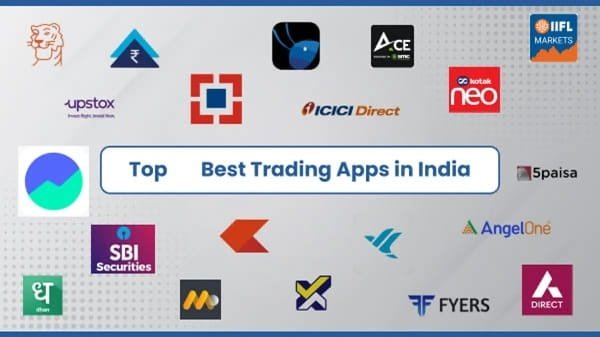
Quick Comparison: Top Trading Apps in India 2026
| App | Type | Equity Delivery | Intraday/F&O | Annual AMC | Best For |
| Zerodha (Kite) | Discount | ₹0 (Free) | ₹20 or 0.03% | ₹300 | Active traders, overall reliability |
| Groww | Discount | ₹20 or 0.1% (min ₹5) | ₹20 or 0.1% | ₹0 | Complete beginners |
| Upstox | Discount | ₹20/order | ₹20 or 0.05-0.1% | ₹0 (first year) | Fast execution, TradingView charts |
| Angel One | Discount/Hybrid | ₹0-₹20 (plan dependent) | ₹20 flat | ₹0-₹240 | Research-backed self-directed trading |
| ICICI Direct | Full-Service | Percentage-based, higher | Percentage-based, higher | Varies by plan | Advisory support, bank-linked convenience |
Charges are approximate as of 2026 and brokers revise rate cards periodically — always confirm current pricing directly on the broker’s website before opening an account.
What Actually Determines “Best” for You
Before comparing specific apps, it’s worth being clear about the factors that should genuinely drive your decision, since the “best” app changes based on your answers here.
- Your experience level matters enormously — a beginner benefits from a simple interface and built-in education, while an experienced trader prioritizes speed, advanced charting, and low costs per order.
- Your trading style — long-term delivery investing versus active intraday or F&O trading — determines which fee structure actually saves you money, since a broker that’s cheap for delivery might not be cheap for frequent intraday trades.
- How much research and advisory support you want, since discount brokers offer minimal hand-holding by design, while full-service brokers charge more specifically because they provide it.
- Platform reliability during high-volatility periods, since an app that lags or crashes during a market-moving event can cost you real money, regardless of how attractive its fee structure looks on paper.
- Your total expected trading volume, since a broker’s AMC and per-order charges matter far more if you’re placing frequent trades than if you’re investing occasionally in a handful of stocks.
Zerodha: The Benchmark for Overall Reliability
Zerodha remains India’s most widely recognized discount broker, and its reputation for platform stability continues to anchor its position as a strong all-round choice.
- Zero brokerage on equity delivery trades makes it genuinely cost-effective for long-term investors who buy and hold rather than trade frequently.
- The Kite platform is widely regarded as fast, stable, and well-designed, holding up reliably even during high-volume, high-volatility trading sessions when many platforms slow down.
- Zerodha’s Varsity education platform, offering free, structured learning modules on markets and trading, is a genuinely valuable resource for beginners wanting to build real understanding before committing capital.
- Where it falls short: it charges a ₹300 annual demat AMC (waived under SEBI’s BSDA rules for smaller portfolios), a cost that competitors like Groww and Upstox don’t charge in their first year or ever.
- Zerodha suits both serious active traders and beginners willing to invest time in learning through Varsity, making it a strong default choice across most trader profiles.
Groww: The Simplest Entry Point for Beginners
Groww has become India’s largest broker by active client count, and its appeal rests almost entirely on how genuinely approachable it makes the first-time investing experience.
- The account opening process is exceptionally quick and intuitive, often completed in just a few minutes, making it a natural first choice for someone opening their very first demat and trading account.
- Its interface strips away complexity, presenting stocks, mutual funds, and basic order types in a way that doesn’t overwhelm someone unfamiliar with market terminology.
- Zero annual maintenance charges keep the ongoing cost of simply holding an account at nil, which matters for casual investors who trade infrequently.
- Where it falls short: unlike Zerodha, Groww charges a small brokerage on equity delivery trades rather than offering it free, and its charting and advanced order tools are noticeably less sophisticated than what active traders typically want.
- Groww suits complete beginners and casual, infrequent investors specifically prioritizing simplicity and ease of onboarding over advanced trading features or the absolute lowest delivery costs.
Upstox: The Speed and Charting Specialist
Upstox has built its reputation around execution speed and genuinely strong charting tools, making it a favorite among traders who lean on technical analysis.
- Native TradingView charting integration gives Upstox users access to a genuinely professional-grade charting experience directly within the app, a meaningful advantage for technically-focused traders.
- Order execution speed is consistently rated among the fastest in the Indian discount broking space, a real practical advantage for intraday traders where timing matters.
- Zero account opening fees and no AMC in the first year make initial onboarding cost-effective, with charges kicking in only from the second year onward.
- Where it falls short: equity delivery isn’t free the way it is with Zerodha, and some users report that customer support response times can lag during high-traffic periods.
- Upstox suits traders who specifically rely on technical charting and want fast order execution, particularly those doing intraday or swing trading where speed and chart quality matter more than delivery-trade savings.
Angel One: The Research-Backed Hybrid Option
Angel One occupies an interesting middle ground, offering discount-broker pricing alongside research and advisory features more commonly associated with full-service brokers.
- In-house research reports and stock recommendations are available directly within the app, giving self-directed traders access to professional analysis without paying full-service broker fees.
- The platform offers multiple pricing plans, letting users choose between a flat-fee structure and other options depending on their trading frequency and preferences.
- Angel One has invested significantly in AI-driven tools and smart recommendations, aimed at helping less experienced users make more informed decisions within the app itself.
- Where it falls short: the sheer number of features and options can feel overwhelming for a complete beginner compared to Groww’s more stripped-down approach, and plan selection requires some upfront research to optimize for your specific trading pattern.
- Angel One suits traders who want built-in research and guidance without stepping up to a full-service broker’s higher fees, striking a reasonable middle ground between Groww’s simplicity and a traditional advisory relationship.
ICICI Direct: The Full-Service, Bank-Linked Choice
For traders who specifically value advisory support, seamless bank integration, and a more traditional broking relationship, ICICI Direct represents the full-service alternative to the discount broker model.
- Direct integration with an ICICI Bank account makes fund transfers and overall account management notably seamless for existing ICICI Bank customers.
- Dedicated research teams and advisory support, including detailed reports and sometimes access to relationship managers, offer a level of guidance discount brokers generally don’t provide.
- The trust and stability of a bank-backed brokerage appeals to more conservative investors, particularly older or less tech-comfortable users who value a recognizable institutional name.
- Where it falls short: brokerage charges run considerably higher than any discount broker on this list, calculated as a percentage of trade value rather than the flat or capped fees typical of Zerodha, Groww, or Upstox, which adds up meaningfully for active traders.
- ICICI Direct suits investors who specifically value advisory support and bank-linked convenience over minimizing brokerage costs, particularly those already banking with ICICI and wanting a single, integrated financial relationship.
Matching the App to Your Specific Trading Style
Beyond the general profiles above, a few more targeted recommendations help based on precisely how you plan to trade.
- If you’re investing for the long term and rarely trade actively, Zerodha’s free equity delivery makes it hard to beat on pure cost, though Groww’s simplicity is a reasonable trade-off if you value ease of use above minor savings.
- If you’re planning to do frequent intraday or F&O trading, prioritize execution speed and low per-order costs — Zerodha and Upstox both perform strongly here, with Upstox’s charting edge mattering more if you’re technically driven.
- If you’re a complete first-timer unsure where to even start, Groww’s low-friction onboarding and Zerodha’s Varsity education content together offer a genuinely solid learning-and-doing combination.
- If you want research support without full-service pricing, Angel One’s built-in research tools offer a reasonable middle path.
- If you specifically want a single relationship with your existing bank and don’t mind paying more for it, ICICI Direct or a similar bank-linked full-service broker remains a legitimate, if pricier, choice.
Practical Steps Before You Commit to an App
A few checks are worth doing regardless of which app you’re leaning toward, since the “best” choice on paper can still disappoint in practice.
- Read recent user reviews specifically about platform stability during high-volatility trading days, since this is where weaker apps tend to show their limitations most visibly, and older reviews may not reflect recent performance.
- Calculate your expected annual costs based on your actual likely trading pattern, not just the headline brokerage figure, since AMC, DP charges, and percentage-based fees on larger trades can shift the real cost comparison significantly.
- Try the demo or explore the app’s free features before funding your account, since interface comfort genuinely affects how confidently and accurately you’ll place orders once real money is involved.
- Check customer support responsiveness, ideally by searching recent user experiences, since resolving an account or fund-transfer issue quickly matters far more than it seems until you actually need it.
- Confirm the broker is SEBI-registered and check its standing with SEBI’s official records, a basic due-diligence step that protects you regardless of which specific app you ultimately choose.
Frequently Asked Questions
Q1. Is it possible to have accounts with multiple trading apps at the same time, and does that make sense for most traders?
A. Yes, it’s entirely possible and fairly common — some traders maintain a primary account with one broker for regular trading and a secondary account elsewhere for specific features (like Upstox’s charting or Zerodha’s cost efficiency), though managing multiple accounts adds complexity, so it’s generally only worth doing once you have a clear, specific reason rather than simply hedging your choice.
Q2. Does a broker charging zero brokerage on delivery trades mean there are no costs at all involved in buying and holding stocks?
A. No — even with zero brokerage, you’ll still pay regulatory charges like STT (securities transaction tax), exchange transaction charges, GST, and stamp duty on every trade, plus DP charges when you sell, so “zero brokerage” specifically refers to the broker’s own fee, not the total cost of the transaction.
Q3. How important is the demat AMC charge in choosing between apps, given some charge ₹300 a year and others charge nothing?
A. For most retail investors with a modest portfolio size, this is a genuinely minor factor compared to per-trade costs if you trade with any regularity, though it’s worth noting SEBI’s BSDA (Basic Services Demat Account) rules waive AMC entirely for smaller portfolio values regardless of broker, so check whether you already qualify for that exemption before treating AMC as a major deciding factor.
Q4. Should a beginner prioritize the app with the lowest fees, or is that the wrong first consideration?
A. For a genuine beginner, ease of use, platform reliability, and access to educational content generally matter more than shaving off a few rupees per trade, since early mistakes from an unfamiliar or confusing interface typically cost far more than any brokerage savings — fee optimization becomes a more relevant priority once you have enough experience to trade with confidence and consistency.
 Nishant Pal