 By Nishant Pal
 When designing a kitchen or bathroom, people often use the terms sink and wash basin interchangeably. However, these fixtures are designed for different purposes and are installed in different parts of a home. Understanding the difference between a sink and a wash basin can help you choose the right fixture for your space.
A sink is primarily designed for washing dishes, food, and household items, making it an essential part of every kitchen and utility area. A wash basin, on the other hand, is intended for personal hygiene activities such as washing hands and face, brushing teeth, and grooming in bathrooms.
So, which is better? The answer depends entirely on where you plan to install it and how you intend to use it. This guide compares sinks and wash basins in terms of design, functionality, materials, maintenance, and ideal applications.
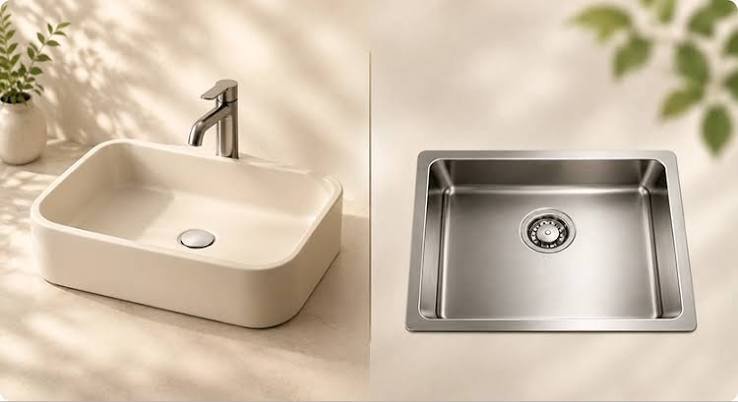
Sink vs Wash Basin: Quick Comparison
| Feature | Sink | Wash Basin |
|---|---|---|
| Primary Purpose | Washing dishes, utensils, food, and cleaning | Washing hands, face, and personal hygiene |
| Installation Area | Kitchen, utility room, laundry | Bathroom, powder room |
| Size | Generally larger and deeper | Smaller and shallower |
| Drain Size | Larger drain opening | Standard drain opening |
| Material Options | Stainless steel, quartz, granite, ceramic | Ceramic, porcelain, stone, glass, resin |
| Water Usage | Heavy daily use | Light to moderate use |
| Best For | Kitchens and utility areas | Bathrooms and washrooms |
What Is a Sink?
A sink is a plumbing fixture designed for household cleaning tasks. It is typically installed in kitchens, laundry rooms, utility spaces, and commercial food preparation areas.
Kitchen sinks are usually larger and deeper than wash basins to accommodate utensils, cookware, fruits, vegetables, and other cleaning tasks.
Advantages of a Sink
- Large washing area
- Deep bowl prevents water splashing
- Suitable for heavy daily use
- Available in single and double-bowl designs
- Durable materials for long-term performance
- Easy to clean
Disadvantages of a Sink
- Requires more installation space
- Larger models may cost more
- Not suitable for bathroom use
- Heavy materials like granite or quartz may require stronger support
Sinks are designed to handle demanding household activities efficiently.
What Is a Wash Basin?
A wash basin is a sanitary fixture installed mainly in bathrooms. It is designed for personal hygiene rather than household cleaning.
Wash basins are available in numerous styles, including wall-mounted, countertop, pedestal, semi-recessed, and under-counter models.
Advantages of a Wash Basin
- Elegant bathroom appearance
- Compact design
- Easy to install
- Wide variety of styles
- Available in multiple materials
- Comfortable height for daily use
Disadvantages of a Wash Basin
- Smaller capacity
- Not suitable for washing utensils
- Can overflow if used for large cleaning tasks
- Decorative finishes may require extra care
Modern wash basins combine practicality with stylish bathroom design.
Sink vs Wash Basin: Key Differences
1. Purpose
The biggest difference lies in their intended use.
A sink is built for washing dishes, cookware, vegetables, and cleaning supplies.
A wash basin is designed for washing hands, face, brushing teeth, and other personal hygiene tasks.
Winner: Depends on usage
2. Size
Kitchen sinks are generally much larger and deeper.
Wash basins are compact and designed to occupy less space.
Winner: Sink (for capacity)
3. Design
Wash basins focus heavily on aesthetics and complement bathroom interiors.
Sinks prioritize functionality, although premium models are also available in stylish designs.
Winner: Wash Basin
4. Durability
Both fixtures are highly durable when made from quality materials.
Kitchen sinks often withstand heavier use and more frequent cleaning.
Winner: Sink
5. Installation
Wash basins offer more installation options, including pedestal, countertop, vessel, wall-mounted, and under-counter designs.
Kitchen sinks are generally available as top-mount, under-mount, or farmhouse styles.
Winner: Wash Basin
6. Maintenance
Both are easy to maintain.
Kitchen sinks require more frequent cleaning due to food waste and grease, while wash basins mainly need regular wiping to prevent soap residue and water stains.
Winner: Tie
Which Material Is Best?
Sink Materials
Common sink materials include:
- Stainless steel
- Quartz composite
- Granite composite
- Fireclay
- Cast iron
- Ceramic
Stainless steel remains the most popular choice due to its durability and affordability.
Wash Basin Materials
Popular wash basin materials include:
- Ceramic
- Porcelain
- Glass
- Natural stone
- Resin
- Solid surface materials
Ceramic and porcelain basins continue to be the preferred options because they are durable, hygienic, and easy to clean.
Which One Should You Choose?
Choose a Sink If You:
- Need a kitchen fixture
- Wash utensils regularly
- Want a deep bowl
- Need a durable work area
- Require heavy daily use
Choose a Wash Basin If You:
- Are designing a bathroom
- Need a fixture for personal hygiene
- Want stylish bathroom interiors
- Have limited space
- Prefer decorative designs
Each fixture serves a completely different purpose, so choosing the correct one depends on where it will be installed.
Factors to Consider Before Buying
Before purchasing a sink or wash basin, consider:
- Available installation space
- Plumbing layout
- Material quality
- Maintenance requirements
- Water usage
- Style and design
- Budget
- Daily usage
Selecting the right fixture improves both functionality and the overall appearance of your home.
Sink or Wash Basin: Which Is Better?
Rather than asking which is better, it’s more accurate to ask which is better for a specific purpose.
A kitchen sink is the clear choice for food preparation, dishwashing, and cleaning tasks because of its larger size and greater durability.
A wash basin is the better option for bathrooms, offering convenience, hygiene, and attractive designs suited to personal care.
Both fixtures are essential in modern homes and complement each other rather than replace one another.
Conclusion
Sinks and wash basins may appear similar, but they are designed for entirely different functions. A sink is built to handle heavy-duty cleaning tasks in kitchens and utility areas, while a wash basin is specifically created for everyday personal hygiene in bathrooms.
If you’re renovating your kitchen, invest in a durable sink that matches your cooking and cleaning needs. If you’re upgrading your bathroom, choose a wash basin that combines functionality with a design that complements your interior décor.
By understanding the differences between these two fixtures, you can make a practical decision that enhances both the efficiency and appearance of your home.
FAQs
1. What is the main difference between a sink and a wash basin?
A sink is designed for washing dishes, food, and household items, whereas a wash basin is intended for personal hygiene tasks such as washing hands and face.
2. Can a wash basin be used in a kitchen?
Although technically possible, it is not recommended. Wash basins are smaller and not designed to handle cookware, utensils, or heavy kitchen use.
3. Which is larger, a sink or a wash basin?
A kitchen sink is generally much larger and deeper than a wash basin to accommodate cooking and cleaning activities.
4. Which material is best for a kitchen sink?
Stainless steel is one of the most popular materials because it is durable, rust-resistant, easy to clean, and affordable. Quartz composite sinks are another excellent option for premium kitchens.
5. Which material is best for a bathroom wash basin?
Ceramic and porcelain are the most popular choices due to their durability, smooth finish, stain resistance, and ease of maintenance.