 By Nishant Pal
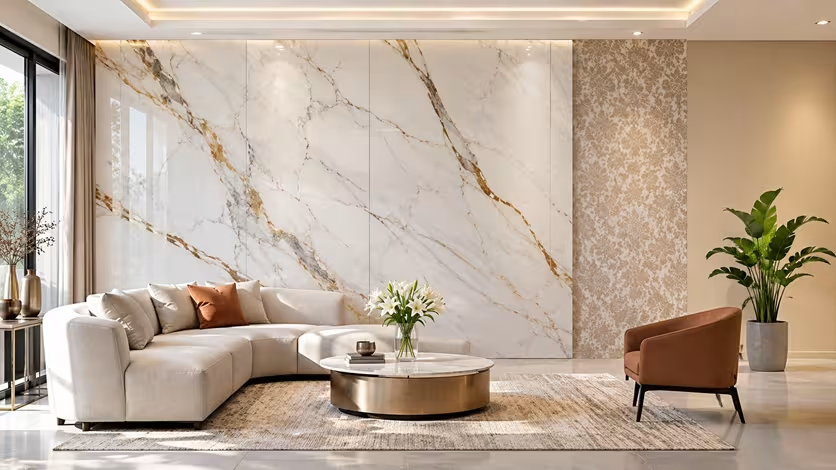
Walls are the biggest canvas in any home, so how you finish them shapes the whole mood of a room. Paint and wallpaper have dressed them for generations, and both still have their place. A new option has changed how designers think about a feature wall, though: large wall slabs now lead the way for homeowners who want a finish with real presence and staying power.
What Large Wall Slabs Bring To A Room
Wall slabs are large-format panels fixed to the wall to create a continuous, near-seamless finish. They offer the look of natural materials with the performance of a modern engineered surface, a winning combination.
The qualities that draw people to them are practical as much as pretty:
- A seamless look, with long panels that avoid repeated joints.
- A hard surface that shrugs off daily scuffs.
- Moisture- and stain-resistant, suited to kitchens and bathrooms.
- A wide palette, from stone-inspired veining to calm, solid tones.
Together, these traits turn a wall from something you repaint every few years into a lasting design feature that quietly lifts the whole room. The surface stays smooth and bright through everyday life, so a feature wall keeps the polished look it had on day one.
How They Compare With Wallpaper And Paint
Each option suits a different need, so a fair comparison helps. Paint is the quickest and most affordable to change, and it offers almost any colour, though it marks and needs refreshing over time. Wallpaper brings pattern and texture at a moderate cost, and it can lift at the edges and struggle in damp rooms.
Wall slabs sit at the more lasting end of the scale. They cost more upfront and require professional fitting, but they deliver a hard-wearing, water-resistant finish that looks good for much longer. A simple way to choose is to match the finish to the room:
- For a quick, low-cost refresh in a bedroom or study, paint is a friendly choice.
- For pattern and personality in a dry, low-traffic room, wallpaper works well.
- For a lasting feature wall or a damp space, large wall slabs earn their place with ease.
Seen this way, the choice comes down to how long you want the finish to last and how hard the wall has to work day to day.
Where Large Wall Slabs Work Best
Large panels come into their own where a surface faces heavy use or where you want a single, uninterrupted plane. They suit some settings especially well.
- Living room feature walls and media units, for a calm, continuous surface.
- Kitchen splashbacks, where a wipe-clean, heat-tolerant panel really helps.
- Bathrooms and shower walls, where moisture resistance and few joints keep things hygienic.
- Hallways and staircases, which see constant traffic and reward a hard-wearing finish.
The same panels often carry weather resistance for outdoor use, so an exterior wall can echo an interior feature for a cohesive look that flows from inside to out.
Design And Finish Options
Part of the appeal is the sheer range of finishes, which lets a wall slab suit almost any scheme. Matt surfaces read as soft and contemporary and hide fingerprints well, while polished finishes reflect light and lift a darker room. Stone-inspired veining brings natural character to a feature wall, and solid tones keep a minimal space calm and quiet.
Large formats mean the pattern runs across the wall with few interruptions, giving the finish a seamless feel. Colour consistency across panels keeps a large surface uniform from one end to the other, so it is worth viewing large samples in the room’s own light at a few times of day before deciding.
Practical Points Before You Choose
A wall slab is a longer-term choice than a tin of paint, so a few practical checks help. Thinking them through keeps the result smooth from fitting to finish.
- Installation: panels need a flat, sound wall and skilled fitting.
- Weight and fixing: confirm the wall can support the panels and the fixings suit the surface.
- Budget: weigh the upfront cost against years of low upkeep and no repainting.
- Longevity: choose a finish you will still love in a decade.
Working through these points keeps the finished wall living up to its promise and avoids surprises on fitting day.
Performance That Keeps Its Good Looks
A feature wall should stay handsome for years, so plan for performance alongside the look. A dense, non-porous surface resists stains without sealing, cleans in moments, and keeps its colour through daily life.
A few qualities make all the difference:
- A non-porous body that resists stains and wipes clean.
- Scratch resistance that keeps the surface smooth.
- Colour stability, so the wall holds its tone over time.
Among large-format options, surfaces from manufacturers such as Neotra Advanced Surfaces offer a non-porous, stain-resistant engineered surface that keeps a wall looking fresh with minimal care. A durable choice from the start rewards you with a feature wall that stays striking for years, needing little more than an occasional wipe to keep it bright.
Conclusion
Large wall slabs have earned their popularity by offering something paint and wallpaper cannot: a seamless, hard-wearing surface that holds its finish for years with little upkeep. They cost more upfront and require professional fitting, but they turn a wall into a lasting design feature. Match the finish to the room, plan the fitting carefully, and a wall slab can give a modern home a sense of quality that pays for itself over time.