 By Akash Sharma
 You lower the lights for dinner and a faint humming begins above your head. Turn the dimmer again, and the buzz becomes sharper. The bulb still glows, but the noise raises an obvious question: is something electrically wrong?
Buzzing usually appears when an LED bulb and dimmer switch do not work smoothly together. LEDs use electronic drivers, while many older dimmers were designed for incandescent lamps. When the electrical signal is controlled unevenly, parts inside the bulb or switch may vibrate and create sound.
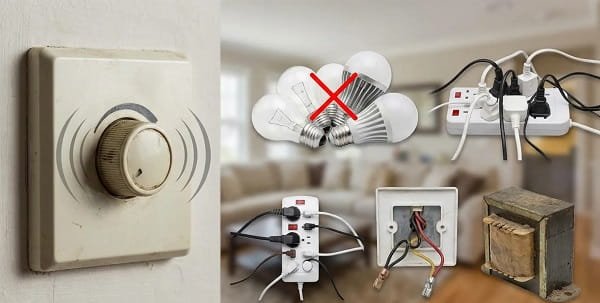
The Bulb and Dimmer May Be Incompatible
Not every LED bulb is dimmable. A non-dimmable bulb connected to a dimmer may flicker, buzz, change brightness suddenly or fail early.
Even a dimmable LED may not work well with every switch. Traditional dimmers may require a higher electrical load than modern LEDs provide. The light may remain quiet at full brightness but become noisy at lower settings.
Check the bulb packaging for the word “dimmable.” Also confirm that the switch is specifically rated for LED lighting.
Older Dimmers Can Create an Unstable Signal
Many homes still use dimmers originally installed for incandescent or halogen lamps. These switches control power differently from modern LED-compatible models.
An older dimmer may make the bulb’s driver work harder, causing small components to vibrate. The switch itself may also hum when controlling several bulbs.
Replacing an outdated dimmer with an LED-rated model often works better than changing bulbs repeatedly.
The Dimmer Load May Be Incorrect
Every dimmer has a minimum and maximum supported load. Because LED bulbs use much less power than incandescent lamps, one or two low-wattage bulbs may fall below the minimum requirement.
Too many bulbs can create the opposite problem. Check the number and wattage of all lights controlled by the switch. Follow the manufacturer’s LED load guidance rather than the older incandescent rating.
Loose Connections Can Produce Noise and Heat
A loose bulb, holder, wire or switch terminal can cause buzzing, flickering, heat or a burning smell.
Switch the light off and allow the bulb to cool before checking whether it is seated correctly. Do not remove switch plates or touch internal wiring unless you are trained to work safely with household electricity.
If the buzz comes from the wall switch, the fitting feels hot or the light flickers when touched, turn off the circuit and call an electrician.
The LED Driver May Be Failing
Inside every LED bulb is a driver that converts household power into the form required by the LEDs. Low-quality or ageing drivers may vibrate more when dimmed.
Test another compatible dimmable bulb in the same fitting. If only one bulb buzzes, that bulb is likely the problem. If several suitable bulbs make the same noise, focus on the dimmer, wiring or circuit.
A bulb that begins buzzing after months of quiet use may be failing.
Brightness Level Can Affect the Buzz
Some bulb-and-dimmer combinations remain quiet in the middle of their range but buzz near the lowest setting. The driver may struggle when the power signal is reduced too far.
Raise the brightness slightly and observe whether the sound stops. Many LED dimmers include a minimum-level adjustment that prevents unstable operation. Follow the manufacturer’s instructions or ask an electrician.
Mixed Bulbs Can Cause Uneven Results
Using different bulb brands, wattages or driver designs on one dimmer can produce uneven brightness and noise. For multi-bulb fixtures, use matching dimmable LEDs from the same series whenever possible.
Smart bulbs should generally not be connected to a traditional wall dimmer unless their manufacturer allows it. They normally need continuous power and are dimmed through an app, remote or voice control.
Know When Buzzing Needs Immediate Attention
A soft hum may be a compatibility issue, but loud crackling, sparks, burning odour or a hot switch requires immediate action.
Turn off the light and isolate the circuit if it can be done safely. Do not keep testing different settings. An electrician should inspect the dimmer, holder and connections before the light is used again.
FAQs
Q: Is a buzzing LED bulb dangerous?
A: A mild buzz may result from dimmer incompatibility. Buzzing combined with heat, flickering, smell or crackling needs prompt inspection.
Q: Will buying a dimmable LED always stop the noise?
A: No. The bulb must also be compatible with the dimmer, and the circuit must stay within its supported LED load.
Q: Why does the bulb buzz only at low brightness?
A: The LED driver may become unstable when power is reduced too far. Raising the minimum setting or replacing the dimmer may help.
Q: Can I use a smart LED bulb with a wall dimmer?
A: Usually not. Most smart bulbs require constant full power unless the manufacturer clearly states otherwise.
 Nishant Pal