 By Saurav Mehra
Two cars can comfortably seat five people, yet become completely different vehicles once the family starts packing for a holiday. Three suitcases, a stroller, backpacks and shopping bags quickly reveal whether the boot was designed for real-world use or merely looks adequate on paper.
Boot capacity is usually expressed in litres, but the number tells only part of the story. A wide opening, low loading lip, flat floor and foldable rear seats can make a smaller boot more useful than a poorly shaped larger one. Measurement methods can also differ between manufacturers, so quoted capacities are best treated as a useful guide rather than a perfect cross-brand comparison.
For Indian buyers who regularly carry luggage, these 10 cars stand out for their generous cargo capacity.
1. Hyundai Verna – 528 Litres
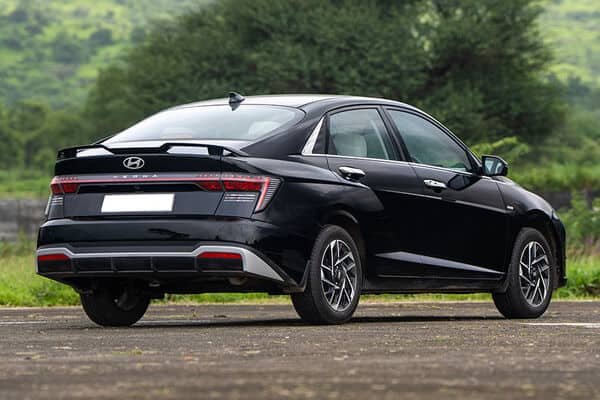
The Hyundai Verna is proof that buyers do not necessarily need an SUV to get serious luggage capacity.
Its 528-litre boot is among the largest in the midsize sedan segment, exceeding the capacities of several direct rivals.
That amount of space is particularly useful for airport trips and family holidays where multiple full-size suitcases need to travel together. The separate sedan boot also keeps luggage isolated from the passenger compartment.
Best for: Families wanting maximum luggage capacity in a comfortable sedan.
2. Volkswagen Virtus – 521 Litres
The Volkswagen Virtus combines a spacious passenger compartment with a 521-litre boot.
For a family sedan, that is substantial capacity. The Virtus becomes particularly attractive to buyers who regularly undertake highway journeys because it combines luggage space with strong turbo-petrol engine options and good high-speed road manners.
It is also a useful reminder that an SUV is not automatically the most practical choice for carrying luggage.
Best for: Highway travellers wanting a spacious, enjoyable sedan.
3. Skoda Slavia – 521 Litres
Sharing its basic platform with the Virtus, the Skoda Slavia also provides 521 litres of luggage capacity with the rear seats in their normal position. Skoda says capacity can increase to approximately 1,050 litres when the rear seats are folded.
That flexibility is valuable when carrying unusually large items that cannot fit within a conventional sedan boot.
For families that want passenger space, luggage capacity and a traditional three-box body style, the Slavia remains one of India’s strongest options.
Best for: Families needing a large and expandable sedan boot.
4. Maruti Suzuki Ciaz – 510 Litres
The Ciaz continues to have one significant practical advantage: a large luggage compartment.
Its approximately 510-litre boot gives families enough capacity for multiple travel bags without requiring a larger SUV.
The Ciaz’s focus on rear-seat space and relaxed driving also complements its luggage-carrying ability. It therefore remains relevant to buyers whose priorities are comfort, practicality and uncomplicated family transportation rather than outright performance.
Best for: Buyers prioritising rear-seat comfort and luggage capacity.
5. Honda City – 506 Litres
The Honda City has long worked well as a family sedan, and its 506-litre boot is an important reason why.
There is enough luggage capacity for normal family holidays, while the City retains the comfort and manageable dimensions that make it practical for everyday urban driving.
This is especially useful for households that need one car to handle office commutes during the week and long-distance family travel on weekends.
Best for: Buyers wanting a practical all-round family sedan.
6. Citroën C3 Aircross
The Citroën C3 Aircross deserves special attention because its cargo capacity depends on the seating configuration.
Citroën has quoted up to 444 litres of luggage space for the Indian five-seat configuration, while the flexible 5+2-seat version can provide up to 511 litres when the third-row seats are removed.
That modularity can be more useful than one impressive fixed boot-space figure. Owners can prioritise passengers when required and create substantially more luggage room when all seven seats are unnecessary.
Best for: Families wanting flexible passenger and luggage configurations.
7. Tata Tigor
Compact sedans can offer surprisingly useful luggage space without becoming difficult to park.
The Tata Tigor has traditionally stood out in this respect, providing a large boot relative to its sub-four-metre footprint. That makes it particularly useful for small families that need luggage capacity but still want a car that is easy to manoeuvre through crowded urban areas.
Its sedan design gives it a practical advantage over similarly sized hatchbacks when conventional suitcase storage is the priority.
Best for: City families wanting a compact car with a useful boot.
8. Renault Kiger
SUV buyers often assume a raised body automatically means more luggage space, but compact dimensions can limit cargo capacity. The Renault Kiger manages this compromise well.
Its boot provides around 405 litres of capacity, which is useful for a sub-four-metre crossover. The rear seats can also be folded when more cargo room is required.
The Kiger therefore works well for buyers who want compact city dimensions, useful ground clearance and respectable luggage-carrying ability in the same vehicle.
Best for: Budget SUV buyers who frequently carry luggage.
9. Nissan Magnite
The Nissan Magnite is another compact SUV that provides useful cargo space without requiring the exterior dimensions of a midsize SUV.
Its boot is large enough for normal shopping, smaller suitcases and everyday family requirements. Foldable rear seating adds flexibility when larger items need to be transported.
For buyers operating in crowded cities, the Magnite’s advantage is balance: you gain SUV-style practicality without making parking and narrow-road driving unnecessarily difficult.
Best for: Buyers wanting an affordable and practical compact SUV.
10. Mahindra XUV 3XO – Up to 364 Litres
The XUV 3XO is an interesting example of why buyers should understand how boot capacity is measured.
Mahindra quotes a cargo volume of up to 364 litres measured up to the roof under ISO V215, while its launch documentation also specifies 295 litres when measured up to the rear-seat backrest under another ISO measurement.
The standard 60:40 split-folding rear seat increases versatility when carrying larger objects.
Rather than comparing its 364-litre figure directly against every other manufacturer’s number, buyers should inspect the actual usable space with their typical luggage.
Best for: Compact SUV buyers wanting flexible cargo arrangements.
Why Boot-Space Numbers Can Be Misleading
A 500-litre boot is not automatically more useful than every 450-litre boot.
Imagine carrying four hard-shell suitcases. A wide and rectangular cargo area may accommodate them efficiently, while wheel-arch intrusions and an awkwardly shaped floor can waste substantial space despite a higher advertised capacity.
When inspecting a car, check:
- Width between the wheel arches
- Height of the loading lip
- Boot opening width and height
- Space underneath the luggage floor
- Rear-seat folding arrangement
- Whether folded seats create a flat floor
- Space occupied by the spare wheel
- CNG cylinders or EV components
- Parcel-tray positioning
Taking your largest suitcase to the dealership may tell you more about practicality than comparing specification sheets.
Sedan vs SUV: Which Has Better Boot Space?
Sedans frequently perform extremely well in outright luggage capacity. The current Verna, Virtus, Slavia and City all provide more than 500 litres based on published specifications.
SUVs and crossovers offer a different advantage: flexibility. Their hatch-style tailgates usually create taller openings, and folding the rear seats can produce a much larger cargo area for bicycles, furniture, appliances or bulky boxes.
A sedan may therefore be better for four suitcases, while an SUV can be more useful when transporting one unusually large object.
Your normal cargo matters more than simply finding the highest litre figure.
FAQs
Q1. Which sedan in India has one of the largest boots?
A. Among mainstream midsize sedans, the Hyundai Verna offers an impressive 528 litres, while the Volkswagen Virtus and Skoda Slavia provide 521 litres each.
Q2. Is 400 litres of boot space enough for a family?
A. For many four- or five-member families, around 400 litres can be adequate for everyday use and shorter trips. Families carrying several large suitcases, a baby stroller or other bulky equipment may benefit from 500 litres or more.
Q3. Why do CNG cars sometimes have less usable boot space?
A. A conventional CNG cylinder is installed in the luggage area and can consume a significant amount of cargo space. Newer dual-cylinder arrangements can improve luggage usability by positioning smaller cylinders beneath a raised boot floor.
Q4. Should I choose an SUV instead of a sedan for more luggage space?
A. Not necessarily. Several midsize sedans offer more than 500 litres of boot capacity. Choose an SUV when you need a taller loading area, folding-seat versatility, easier loading of bulky objects or other SUV characteristics—not simply because you assume it has a bigger boot.