 By Saurav Mehra
For someone driving 40 or 50 kilometres every working day, fuel economy is not just a number printed in a brochure. Over several years of ownership, the difference between an average petrol car and an efficient CNG car can translate into substantial savings at the fuel station.
That explains why factory-fitted CNG cars remain important in India even as electric vehicles become more common. Modern CNG models have also moved beyond bare-bones transportation. Buyers can now find CNG hatchbacks, sedans and crossovers with touchscreen infotainment, multiple airbags, automatic climate control and increasingly practical dual-cylinder installations.
If high mileage and lower everyday running costs are your priorities, these 10 CNG cars deserve consideration.
1. Maruti Suzuki Celerio S-CNG
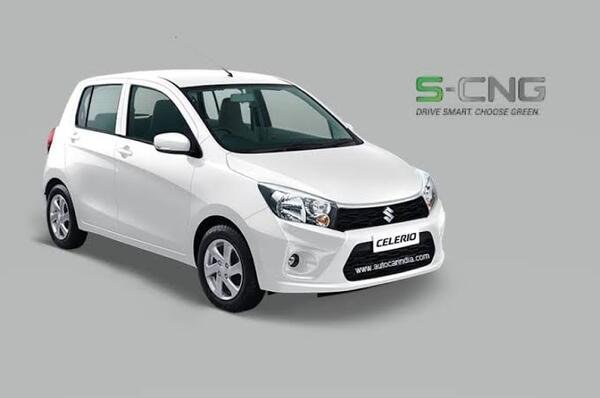
The Celerio is difficult to overlook when maximum fuel efficiency is the objective. Its S-CNG version has a certified efficiency of approximately 34.43 km/kg, placing it among India’s most economical mainstream CNG cars.
Its compact dimensions are particularly useful in congested cities, while the relatively simple powertrain suits buyers primarily looking for inexpensive daily transportation.
The Celerio makes the strongest case for commuters who cover substantial monthly distances and have convenient CNG availability near home or work.
Best for: Maximum mileage and daily city commuting.
2. Maruti Suzuki WagonR S-CNG
The WagonR combines excellent CNG efficiency with one advantage that matters greatly to families: cabin space.
Its S-CNG version offers a claimed efficiency of approximately 34.05 km/kg. The tall-boy design provides generous headroom and makes getting in and out relatively easy, especially for elderly passengers.
For buyers who find the Celerio too compact but still want exceptionally low running costs, the WagonR offers a useful middle ground.
Best for: Families wanting mileage with a spacious cabin.
3. Maruti Suzuki Alto K10 S-CNG
The Alto K10 follows a straightforward formula: keep the car small, light and economical.
Its S-CNG version delivers around 33.85 km/kg under certified conditions. Combined with compact dimensions, this makes it particularly suitable for crowded streets, short urban trips and tight parking spaces.
It is less appropriate for households regularly carrying five adults and substantial luggage, but as a commuter or second family car, its efficiency is difficult to ignore.
Best for: Budget-conscious urban commuters.
4. Maruti Suzuki Dzire S-CNG
High CNG mileage does not necessarily require buying a small hatchback.
The Dzire S-CNG offers approximately 33.73 km/kg, giving buyers sedan practicality while maintaining remarkably low fuel consumption. Its more comfortable rear seating and separate boot make it particularly relevant to small families.
The Dzire is a sensible option for buyers whose car regularly performs multiple roles—office commute during the week and family transportation on weekends.
Best for: Families wanting a fuel-efficient CNG sedan.
5. Maruti Suzuki S-Presso S-CNG
The S-Presso’s compact footprint, upright seating and high fuel efficiency make it particularly suited to city use.
Its S-CNG version delivers around 32.73 km/kg under certified testing. The raised seating position may also appeal to buyers who prefer better outward visibility than a conventional low-slung hatchback provides.
The S-Presso is primarily an economy-focused urban vehicle, so buyers should compare its cabin space, highway behaviour and overall safety requirements against alternatives before deciding.
Best for: City users wanting an affordable high-mileage CNG car.
6. Maruti Suzuki Swift S-CNG
The Swift offers something slightly different from purely economy-focused CNG hatchbacks.
Its CNG version delivers approximately 30.90 km/kg, while retaining the compact dimensions and easy-to-drive nature that have made the Swift popular among Indian buyers.
It can be particularly attractive to younger buyers or small families who want to reduce fuel expenses without moving to a car designed solely around maximum economy.
Best for: Buyers wanting mileage with a more youthful hatchback experience.
7. Toyota Glanza E-CNG
The Glanza E-CNG is worth considering when you want high fuel efficiency but prefer a larger, more premium hatchback.
Its certified CNG efficiency is around 30.61 km/kg. Compared with smaller mileage champions, the Glanza provides a roomier cabin and a more premium overall experience.
This makes it suitable for households where the CNG car will be the primary family vehicle rather than simply an inexpensive commuter.
Best for: Buyers wanting a premium hatchback with low running costs.
8. Maruti Suzuki Baleno S-CNG
The Baleno S-CNG follows a similar formula to the Glanza and offers approximately 30.60 km/kg.
Its major advantage is the balance between efficiency and everyday family practicality. There is more passenger space than in entry-level hatchbacks, while the cabin and feature package feel better suited to longer ownership.
For a family moving from petrol to CNG but unwilling to downsize substantially, the Baleno deserves attention.
Best for: Family buyers wanting space and strong CNG efficiency.
9. Maruti Suzuki Fronx S-CNG
The Fronx is particularly interesting for buyers who like crossover styling but still want the low running costs associated with CNG.
Its S-CNG version offers a claimed efficiency of approximately 28.51 km/kg. Although that figure is lower than the smallest Maruti hatchbacks, it remains impressive for a vehicle providing a more substantial crossover-style package.
The Fronx therefore works well for buyers willing to sacrifice a little outright mileage for styling, cabin experience and greater road presence.
Best for: Buyers wanting an efficient CNG crossover.
10. Hyundai Grand i10 NIOS Hy-CNG Duo
The Grand i10 NIOS is an important alternative for buyers who do not want their CNG shortlist dominated entirely by Maruti Suzuki.
Hyundai offers the hatchback with a 1.2-litre bi-fuel petrol/CNG engine, and the current CNG range includes Magna and Sportz configurations. Hyundai’s current hatchback information indicates efficiency of up to approximately 27 km/kg for the Grand i10 NIOS.
More importantly for everyday usability, Hyundai’s Hy-CNG Duo system uses a dual-cylinder arrangement designed to improve luggage practicality compared with a large conventional CNG cylinder occupying much of the boot.
Best for: Buyers wanting CNG economy with good urban comfort and features.
Mileage Is Not the Only Thing to Check in a CNG Car
Choosing the car with the largest km/kg number can look like the obvious decision, but the cheapest car to run is not automatically the best car to own.
Before buying, consider:
- CNG availability: Check stations along routes you regularly use rather than relying only on the number of stations in your city.
- Boot space: Traditional CNG installations can consume substantial luggage capacity. Dual-cylinder designs can improve practicality.
- CNG performance: Engine output generally falls when running on CNG, which can become noticeable with passengers, luggage or steep gradients.
- Petrol tank: A factory CNG vehicle remains bi-fuel, allowing petrol operation when CNG is unavailable.
- Safety: Always prefer manufacturer-fitted CNG systems rather than poorly installed aftermarket conversions.
- Annual running: Someone driving only a few thousand kilometres annually may take considerably longer to recover the additional purchase price of a CNG variant.
Also remember that km/kg and km/l are different measurements. A CNG figure of 30 km/kg cannot simply be compared numerically with a petrol figure of 20 km/l. Running cost per kilometre is a more meaningful comparison because fuel prices are different.
Claimed CNG Mileage vs Real-World Mileage
Certified mileage figures are produced under specified testing conditions. Your everyday result can be lower.
Heavy traffic, AC use, tyre pressure, passenger load, driving style, road gradients and frequent acceleration all influence efficiency. A driver spending hours in bumper-to-bumper traffic should therefore not expect the brochure figure on every tank.
For a realistic ownership calculation, track how many kilometres you actually travel each month and compare the local prices of CNG and petrol.
FAQs
Q1. Which CNG car gives the highest mileage in India?
A. Among the mainstream factory-CNG models listed here, the Maruti Suzuki Celerio S-CNG is one of the strongest mileage performers, with certified efficiency of around 34.43 km/kg.
Q2. Is CNG suitable for long-distance highway driving?
A. Yes, provided CNG stations are conveniently available along the route. Since CNG availability can be less predictable outside major urban corridors, keeping sufficient petrol in the tank is sensible for longer journeys.
Q3. Does running a car on CNG reduce engine power?
A. Generally, yes. A bi-fuel engine usually produces less power and torque while operating on CNG than on petrol. The difference may be more noticeable when the car is fully loaded, climbing steep roads or overtaking at highway speeds.
Q4. Is a dual-cylinder CNG car better?
A. A dual-cylinder arrangement can be significantly more practical because smaller cylinders can be positioned to preserve usable luggage space. However, buyers should still inspect the actual boot rather than assuming every dual-cylinder CNG car provides the same amount of storage.