 By Akash Sharma
 An old Bluetooth speaker may sound perfectly acceptable inside a quiet bedroom. Take it to a terrace party, picnic, campsite or poolside gathering, however, and its weaknesses become obvious. The volume disappears in open space, the battery drops before the event ends, and a little dust or rain creates immediate worry.
Upgrading an outdoor speaker should not be based only on age or a newer Bluetooth number printed on the box. The right time comes when the existing speaker can no longer provide dependable battery life, suitable protection, stable connectivity or enough sound for the places where you use it.
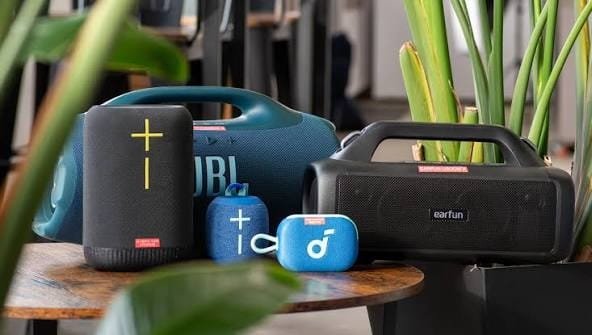
Upgrade When the Battery No Longer Lasts Through an Outing
Rechargeable batteries gradually lose capacity. A speaker that originally played for ten hours may eventually struggle to complete a two-hour picnic.
Before replacing it, charge it fully using a suitable cable and adapter. Turn off lighting effects, reduce excessive bass settings and test it at moderate volume. Outdoor listening at maximum volume naturally uses more battery power.
Consider upgrading when the speaker switches off unexpectedly, loses charge while stored or needs continuous connection to a power bank. A swollen battery, unusual heat or chemical smell requires immediate discontinuation and professional handling.
Choose a New Model When Weather Protection Is Missing
Outdoor speakers face dust, splashes, damp grass, light rain and accidental drink spills. A speaker without a clear IP rating may not be suitable for such conditions.
For regular outdoor use, look for meaningful water and dust protection. An IP67-rated model generally offers both dust resistance and temporary water protection under specified test conditions. Some newer products provide IP68 protection, but this still does not mean they should be intentionally left underwater.
Upgrade when your existing speaker has no verified rating, damaged port covers or previous moisture exposure. Remember that water resistance can weaken after drops, cracks and years of use.
Replace It When Outdoor Sound Feels Weak
Sound behaves differently outdoors because there are fewer walls to reflect it. A compact speaker that fills a bedroom may sound thin in a garden or open terrace.
Upgrade when you constantly operate the speaker at full volume and still cannot hear vocals clearly. Running at maximum output may also increase distortion and reduce battery life.
For open spaces, consider larger drivers, stronger amplifier output and better bass radiators. Do not judge performance by wattage alone. Cabinet design, tuning and speaker direction also influence how well sound travels.
Upgrade for Better Multi-Speaker Connectivity
Older portable speakers may connect only to one phone and cannot link with another speaker. Newer models increasingly support stereo pairing or multi-speaker grouping.
Stereo pairing allows two compatible speakers to handle separate left and right channels. Party or broadcast-style connection sends audio to several compatible units for wider coverage.
Features such as Auracast may become useful when you want to connect multiple supported speakers or receivers. However, compatibility matters more than the Bluetooth version. Two products carrying modern Bluetooth labels may still use different proprietary pairing systems.
Choose a new speaker only after confirming that it works with the devices or additional speakers you intend to use.
Consider Upgrading When Connections Keep Dropping
Occasional interruptions may come from crowded wireless environments, distance or interference from Wi-Fi equipment. Restart the phone and speaker, remove the old pairing and connect them again before replacing anything.
An upgrade becomes sensible when the speaker repeatedly disconnects at normal distances, fails with several phones or develops noticeable audio interruptions outdoors.
Newer wireless hardware may provide improved connection efficiency, but real performance still depends on antenna design, obstacles and the source device.
Move to USB-C and Faster Charging
An ageing speaker with a damaged Micro-USB port can become inconvenient during travel. Finding the correct cable may also be difficult when your phone and power bank already use USB-C.
A modern USB-C speaker can simplify packing and may provide quicker charging. Some larger outdoor models can also function as power banks for smartphones.
Upgrade when the charging port feels loose, charging takes unusually long or cable movement repeatedly interrupts power. Stop using the device if the port produces heat, sparks or a burning smell.
Check Portability Before Buying More Power
A louder speaker is usually larger and heavier. Before upgrading, think about whether you will carry it on a trek, place it in a car or use it mainly on a terrace.
Look for a strong handle, strap, carabiner or stable base. Rubber protection and drop-resistant construction can be valuable outdoors. A powerful speaker that is too heavy to carry may remain unused at home.
FAQs
Q: Should I upgrade only because a speaker has an old Bluetooth version?
A: No. Check connection stability, battery life, supported codecs, multi-speaker features and compatibility. A newer version number does not guarantee better outdoor performance.
Q: What IP rating is suitable for an outdoor Bluetooth speaker?
A: IP67 is a practical choice for dust, splashes and accidental water exposure. Always follow the manufacturer’s exact limitations.
Q: Is a larger Bluetooth speaker always better outdoors?
A: Larger models often provide stronger sound and battery life, but they are heavier. Choose according to the size of the gathering and how far you need to carry it.
Q: Can an old Bluetooth speaker battery be replaced?
A: Some premium models can be serviced, while many compact speakers use sealed construction. Compare authorised battery-replacement costs with the price and features of a new speaker.
 Nishant Pal